
Fire safety compliance is not only about having the right equipment in place. You also need to show that your fire safety arrangements are being managed, checked, maintained and reviewed.
That is where records matter.
A fire alarm may be fitted, but can you show when it was last tested? Your team may have had training, but can you prove who attended and when? Your fire extinguishers may look fine, but do you have a current service record? Your fire risk assessment may have been completed, but has it been reviewed after changes to your premises?
For many businesses, the biggest fire safety weakness is not always the equipment itself. It is the lack of clear records.
At Expert Fire Solutions, we help businesses across the North East keep fire safety simple, practical and organised. This guide explains the main fire safety log book requirements, what records you should keep and how good record keeping can help protect your staff, visitors, customers and business.
Why fire safety records are so important
Fire safety records help you prove that your business is taking its responsibilities seriously. They show that checks are being completed, faults are being reported, equipment is being maintained and staff are being trained.
In England, the Responsible Person must carry out and regularly review a fire risk assessment, put suitable fire safety measures in place, plan for emergencies and provide staff with fire safety information, instruction and training. GOV.UK guidance also states that the Responsible Person must keep a written record of the fire risk assessment.
Records are also useful during inspections. Local fire and rescue authorities can inspect premises and issue fire safety notices where changes are needed. If an inspector asks how you manage fire safety, your log book and supporting documents can help show the routine behind your checks.
Good records also help your own team. They make it easier to see what has been done, what is overdue and what still needs attention. Without records, fire safety can become guesswork.
What is a fire safety log book?
A fire safety log book is a central place for recording fire safety checks, tests, servicing, training, drills, faults and remedial work.
It can be a printed book, a digital system or a well-organised folder. The format is less important than the information inside it. What matters is that your records are accurate, up to date, easy to find and clear enough for someone else to understand.
A good fire safety log book should answer simple questions:
- What was checked?
- When was it checked?
- Who checked it?
- What was the result?
- Were any faults found?
- What action was taken?
- When was the issue fixed?
- Where is the certificate or report?
If your records cannot answer those questions, they may not give you enough evidence of fire safety management.
Your fire risk assessment records
Your fire risk assessments are one of the most important fire safety records your business should hold.
A fire risk assessment identifies fire hazards, people at risk, existing fire safety measures and actions needed to reduce risk. GOV.UK’s five-step checklist says the process includes identifying hazards, identifying people at risk, evaluating and acting, recording, planning and training, then reviewing the assessment. It also states that you must complete a fire risk assessment and keep a record of it.
Your fire risk assessment records should include:
- The current fire risk assessment.
- The date it was completed.
- The name and details of the assessor.
- The significant findings.
- The action plan.
- Evidence that actions have been completed.
- Review dates.
- Records of changes made after reviews.
- Any previous assessments that may be needed for reference.
Your assessment should not sit untouched for years. It should be reviewed regularly and updated if there are significant changes. These may include building works, new processes, changes in staff numbers, changes in opening hours, new storage arrangements, changes in occupancy or any fire incident.
GOV.UK’s checklist also says you must keep a record that your fire risk assessment has been reviewed and the date of the review.
Fire safety arrangements and emergency plans
Your records should include your fire safety arrangements and emergency plan. These explain how fire safety is managed day to day.
GOV.UK guidance for people with duties under fire safety legislation states that fire safety arrangements for each premises must be recorded. It also explains that proper management includes arrangements for warning and evacuation, staff roles, fire risk assessments and keeping fire safety systems and equipment in working order.
Your fire safety arrangements may include:
- Who is responsible for fire safety.
- Who carries out routine checks.
- Who manages contractors.
- How faults are reported.
- How staff are trained.
- How visitors and contractors are managed.
- What happens when the fire alarm sounds.
- How people evacuate.
- Where people assemble.
- How vulnerable people are supported.
- How records are stored.
Your emergency plan should be clear enough for staff to follow. It should also reflect how your premises actually works. For example, a small office, large warehouse, care setting, school, restaurant and multi-occupied building will all need different arrangements.
Fire alarm test and servicing records
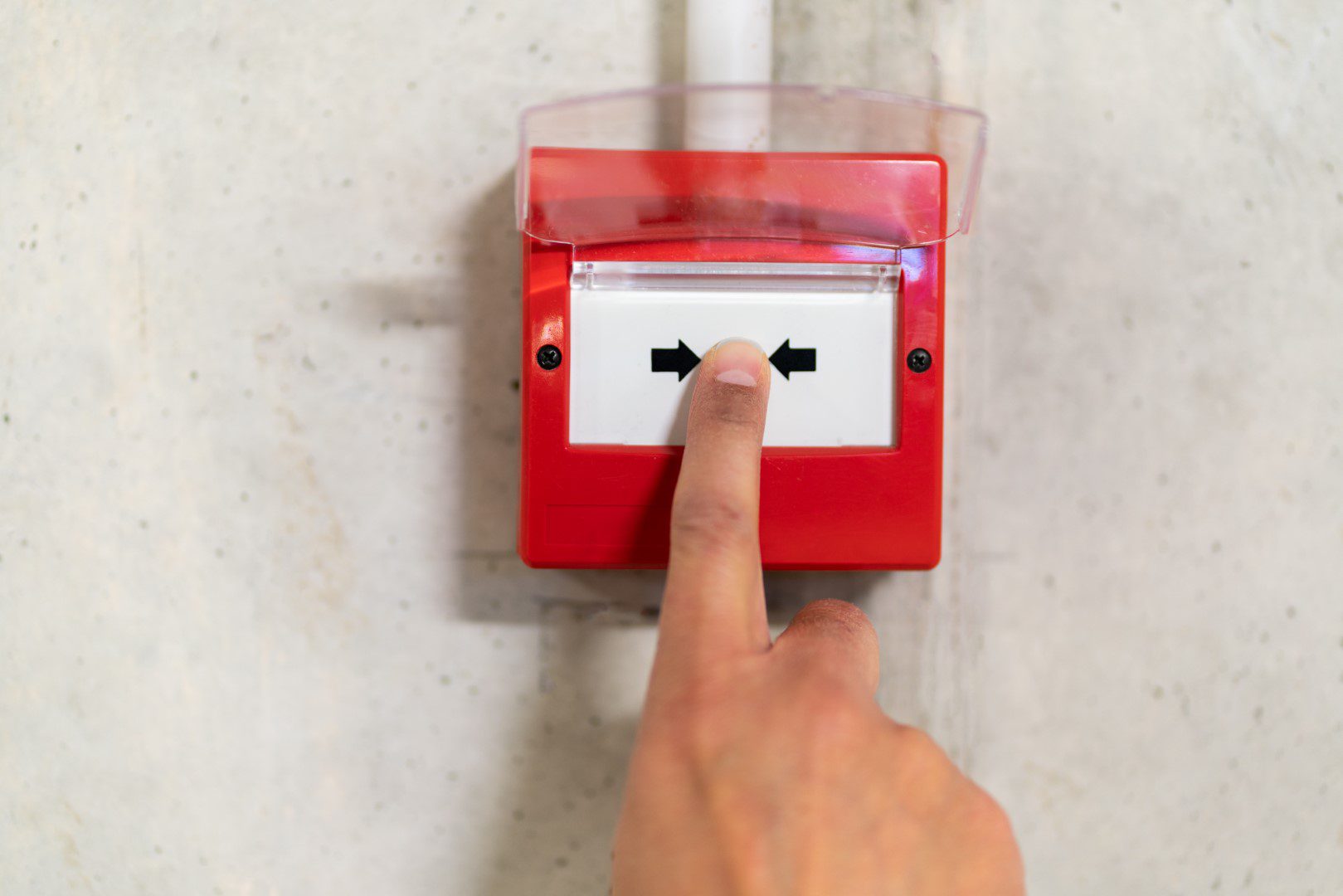
Your fire alarms should be tested and maintained so they can warn people quickly if a fire starts.
Your fire safety log book should include records of weekly fire alarm tests. These should normally show the date, time, call point tested, result of the test, person carrying out the test and any faults found.
You should also keep fire alarm servicing records from your competent contractor. These may include inspection reports, service certificates, fault reports, panel readings and details of any remedial work.
Your fire alarm records should show:
- Weekly tests.
- Call points tested in rotation.
- False alarms.
- Faults shown on the panel.
- Contractor servicing visits.
- Repairs and replacement parts.
- Changes to the system.
- Alarm monitoring arrangements where relevant.
Staff should know what to do if the alarm panel shows a fault. Recording the fault is only the first step. Your log book should also show what action was taken and when the issue was resolved.
Emergency lighting records
Emergency lighting helps people find their way out if normal lighting fails. It is especially important in internal corridors, staircases, windowless areas, basements, large open spaces and premises used outside daylight hours.
Your records should include routine emergency lighting tests and annual full duration test results. GOV.UK’s fire risk assessment checklist asks whether monthly and annual testing routines are in place for emergency escape lighting, and whether records of testing and maintenance are being kept.
Emergency lighting records should include:
- Monthly functional test dates.
- Areas or circuits tested.
- Annual full duration test results.
- Faults found.
- Repairs completed.
- Fittings replaced.
- Battery or charging issues.
- Contractor service reports.
If a light fails during a test, the record should not stop at “failed”. It should show who was told, what action was taken and when the repair was completed. This creates a clear trail from fault to fix.
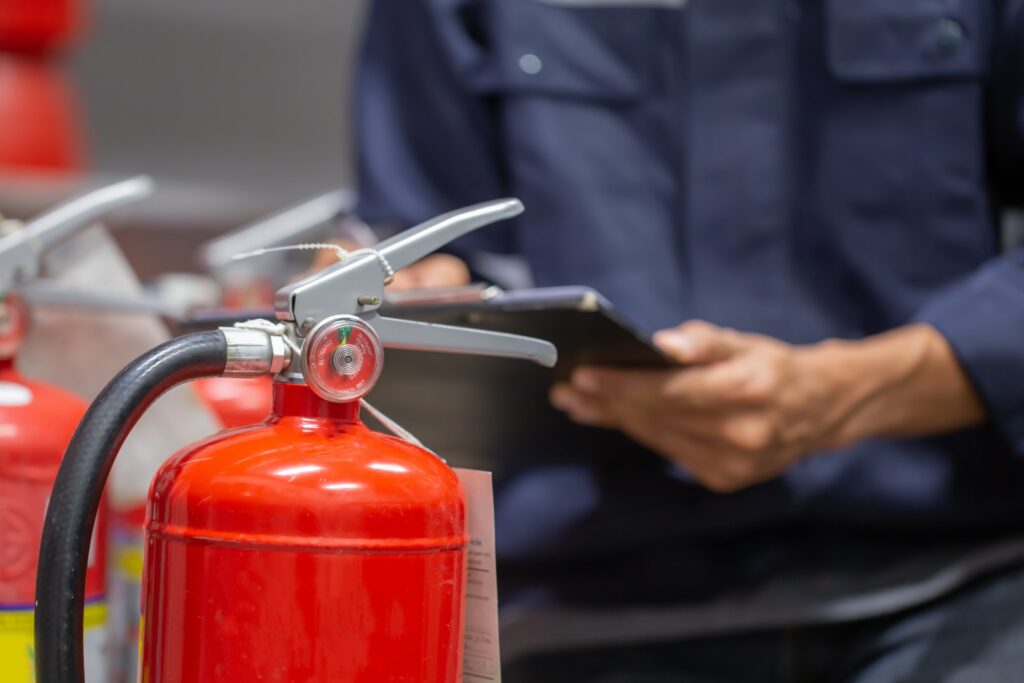
Fire extinguisher records
Fire extinguishers are only useful if they are correctly located, suitable for the risks present and maintained properly.
Your log book should include regular visual checks and annual service records. Visual checks can help identify missing extinguishers, blocked access, broken seals, discharged units, damaged hoses, corrosion or extinguishers that have been moved from their proper location.
Your fire extinguisher records should include:
- Routine visual checks.
- Annual servicing certificates.
- Extinguisher types and locations.
- Any missing or damaged extinguishers.
- Replacement units.
- Discharged extinguishers.
- Staff reports of damage or misuse.
- Any changes recommended after a fire risk assessment.
You should also make sure staff understand that extinguishers are not a substitute for safe evacuation. They should only be used by trained people, where it is safe and where the fire is small.
Fire door inspection records
Fire doors are a key part of fire safety. They help slow the spread of smoke and fire, protect escape routes and support compartmentation.
A fire door that does not close properly, has damaged seals or has been wedged open may not provide the protection expected. That is why fire door checks should be recorded.
Your fire door records should include:
- Inspection dates.
- Door locations.
- Condition of doors and frames.
- Checks on closers, hinges, latches and seals.
- Damage to glazing or vision panels.
- Gaps around the door.
- Doors that fail to close correctly.
- Doors found wedged or held open incorrectly.
- Repairs completed.
- Replacement doors or parts.
Fire doors are often affected by everyday use. In busy premises, damage can happen quickly through trolleys, deliveries, foot traffic, misuse or building movement. Regular records help you spot repeated problems.
Fire stopping records
Fire stopping helps maintain the fire resistance of walls, floors and service penetrations. It is especially important where cables, pipes, ducts or other services pass through fire-resisting construction.
Fire stopping records are often missed because the work is hidden above ceilings, behind panels or inside service risers. However, these records can be very important, particularly after refurbishment, cabling work, plumbing work or changes to mechanical and electrical services.
Your fire stopping records should include:
- Fire stopping surveys.
- Photos of completed work.
- Locations of fire-stopped areas.
- Product details where available.
- Installer information.
- Remedial reports.
- Records of penetrations made by contractors.
- Confirmation that damaged fire stopping has been repaired.
Contractors can affect fire stopping without meaning to. For example, a new cable route through a fire-resisting wall may leave a gap that needs to be sealed correctly. Your records should make it clear how these works are controlled and checked.
Fire safety training records
Your fire safety training records show that staff have been given the information they need to act safely.
GOV.UK guidance says the Responsible Person must provide staff information, fire safety instruction and training. It also says the fire risk assessment process includes preparing an emergency plan and providing training.
Training records should include:
- The date of training.
- The type of training provided.
- Names of staff who attended.
- The trainer or training provider.
- Topics covered.
- Fire warden or fire marshal training.
- New starter induction records.
- Refresher training dates.
- Records for temporary, agency or shift staff.
Training records are particularly important where staff have specific duties during an evacuation. Fire wardens, managers, reception staff, night staff and lone workers may all need different levels of instruction.
Your records should also show that new starters are not missed. A staff member who joined after the last group training session still needs fire safety information.
Fire drill and evacuation records
Fire drills help test whether people understand what to do when the alarm sounds. They can also reveal issues with escape routes, assembly points, staff behaviour, visitor management or evacuation times.
Your fire drill records should include:
- The date and time of the drill.
- Who organised it.
- Areas included.
- Evacuation time.
- Any problems found.
- Staff or visitor issues.
- Blocked routes or doors.
- Alarm audibility concerns.
- Actions needed.
- Follow-up action completed.
If a drill shows that people ignored the alarm, used the wrong exit or gathered in an unsafe place, that should be recorded and acted upon. A drill is not only a pass or fail exercise. It is a chance to learn what works and what needs to change.
Maintenance and remedial work records
Every fault should have a clear record from report to completion. This is one of the most important parts of fire safety record keeping.
For example, if an emergency light fails, your records should show the failed fitting, the date it was found, the person it was reported to, the contractor visit, the repair and the completion date.
The same applies to alarm faults, damaged extinguishers, broken fire doors, missing signs and fire stopping defects.
Your remedial records should include:
- The fault or issue.
- The date it was found.
- Who reported it.
- Risk level or priority.
- Temporary measures where needed.
- Contractor details.
- Quote or job number.
- Completion date.
- Evidence of completion.
- Any follow-up checks.
Leaving faults open without action can create risk. It can also make your records look weak, even if the original check was carried out on time.
Shared premises records
If your business is in a shared building, record keeping can be more complicated. You may rely on a landlord, managing agent or other tenants for common fire alarms, stairs, corridors, emergency lighting, fire doors and escape routes.
GOV.UK guidance says that where there is more than one Responsible Person, they must work together to meet their responsibilities. It also explains that duty holders in multi-occupied premises need to co-operate so fire safety measures are co-ordinated.
Your records should include:
- Who is responsible for shared areas.
- Landlord or managing agent contact details.
- Shared fire alarm test records where available.
- Emergency lighting records for common areas.
- Fire drill arrangements.
- Maintenance reports for shared escape routes.
- Evidence of communication with other Responsible Persons.
- Any concerns raised and responses received.
If your staff use a shared staircase, you should know that it is being checked. If your business relies on a shared alarm, you should understand how it is tested and maintained.
Paper or digital records?
Both paper and digital records can work. A paper fire safety log book is simple and easy to use on site. A digital system can be easier to search, back up and share with managers or contractors.
Whichever format you choose, records should be:
- Easy to access.
- Kept up to date.
- Protected from loss or damage.
- Clear and readable.
- Available during inspections.
- Backed up if digital.
- Filed with certificates and reports.
The main problem is not the format. It is inconsistency. If alarm tests are in a paper book, training records are in emails, extinguisher certificates are in a drawer and remedial works are held by a contractor, it becomes harder to see the full picture.
A central system is usually best.
Common fire safety record mistakes
Many businesses have some fire safety records, but gaps appear over time. Common mistakes include:
- Missing weekly fire alarm test entries.
- No evidence of emergency lighting tests.
- Old fire risk assessments with no review record.
- Training records that do not include all staff.
- No record of fire drills.
- Certificates saved but not linked to the log book.
- Faults recorded with no completion date.
- Fire door checks not recorded.
- No evidence of fire stopping work after refurbishment.
- Shared premises responsibilities not documented.
These issues are usually fixable. The first step is to gather what you already have, identify gaps and set up a routine that is easy to maintain.
How Expert Fire Solutions can help
Fire safety records should make compliance easier, not more confusing. With the right system in place, you can see what has been done, what needs attention and what evidence is available if your business is inspected.
At Expert Fire Solutions, we support businesses across the North East with fire risk assessments, fire alarms, emergency lighting, fire extinguishers, fire doors, fire stopping and fire safety training. We can help you understand what records you need, identify gaps and put practical routines in place.
If you are unsure whether your fire safety log book is complete, or you need help getting your records under control, get in touch with Expert Fire Solutions.

