
Warehouses are busy working environments where fire safety needs careful attention. Stock, packaging, machinery, vehicles, charging equipment, racking, staff movement and delivery schedules can all create risks if they are not properly managed. A small fire in the wrong place can spread quickly, cause major disruption and put people at serious risk.
For warehouse owners, operators, facilities managers and Responsible Persons, fire safety is not just about having a few extinguishers on site. It is about understanding how the building is used, where the risks are, how people would escape and what measures are needed to reduce the chance of a fire starting.
At Expert Fire Solutions, we work with businesses to help make fire safety clear, practical and manageable. In this guide, we explain the key fire risks in warehouses, the equipment businesses may need and the compliance duties that should not be ignored.
Why Warehouse Fire Safety Matters
Warehouses can be higher-risk environments because they often contain large amounts of combustible material. Cardboard, pallets, shrink wrap, packaging, textiles, plastics, paper, chemicals and stored goods can all increase the fire load within a building.
A warehouse fire can also be difficult to control once it develops. High ceilings, large open spaces and racking systems can allow smoke and heat to spread. If stock is stored too close to lighting, heating systems, electrical equipment or escape routes, the risk becomes greater.
Fire safety for warehouses is about protecting people first. Staff, visitors, delivery drivers, contractors and maintenance workers all need to be able to evacuate safely. It is also about protecting the building, stock, equipment, business operations and nearby premises.
A well-managed fire safety plan can reduce risk, support compliance and help businesses avoid serious disruption.
Who Is Responsible For Fire Safety In A Warehouse?
In most warehouse settings, the Responsible Person has a legal duty to manage fire safety. This may be the employer, building owner, occupier, landlord, managing agent or anyone with control over the premises.
In shared warehouse sites, responsibility may sit with more than one person or organisation. For example, a landlord may control the structure of the building while a tenant controls day-to-day operations, stock levels and staff procedures. Where responsibility is shared, everyone involved needs to co-operate and make sure fire safety arrangements are clear.
The Responsible Person must make sure that suitable fire safety measures are in place. This includes identifying risks, taking steps to reduce them, providing suitable equipment, maintaining systems and making sure people know what to do in an emergency.
A professional fire risk assessment is one of the most important starting points for warehouse fire safety.
Fire Risk Assessments For Warehouses
A fire risk assessment looks at the specific risks within your warehouse and considers whether current control measures are suitable. No two warehouses are exactly the same, so a generic approach is rarely enough.
A warehouse fire risk assessment should consider the building layout, escape routes, number of people on site, type of stock stored, storage methods, electrical equipment, heating systems, charging points, fire alarm provision, emergency lighting, fire doors, fire stopping and staff training.
It should also consider how work is carried out. Are deliveries managed safely? Are forklift trucks charged in suitable areas? Are flammable materials stored correctly? Are escape routes kept clear during busy periods? Are contractors controlled when carrying out hot works or maintenance?
The findings should be recorded and acted on. If the assessment identifies missing signage, blocked exits, poor housekeeping or insufficient fire detection, those issues should be dealt with promptly.
Regular reviews are also important. If stock changes, racking is moved, a mezzanine is added, working hours change or more staff are employed, the fire risk assessment should be reviewed.
Common Fire Risks In Warehouses
Warehouses can contain many possible ignition sources and combustible materials. Understanding these risks is essential for effective prevention.
Electrical faults are a common concern. Damaged cables, overloaded sockets, poor maintenance, temporary wiring and faulty equipment can all create fire risks. Warehouses often rely on lighting, conveyors, packing machinery, office equipment, security systems and charging points, so electrical safety should be managed carefully.
Storage is another major issue. Poorly stacked stock, overloaded racking, blocked aisles and combustible materials stored near heat sources can all increase risk. Packaging materials such as cardboard and plastic wrap should be managed properly and waste should not be allowed to build up.
Forklift trucks and battery charging areas need particular care. Charging should take place in suitable locations with good ventilation, clear separation from combustible materials and appropriate controls. Damaged batteries, poor charging practices and cluttered charging areas can all create avoidable risks.
Hot works can also be high risk. Welding, cutting, grinding and similar work should be controlled through clear procedures, suitable supervision and checks after the work is complete.
Flammable liquids, aerosols, chemicals and cleaning products should be stored correctly. They should not be left in general storage areas without proper controls. The type, quantity and location of these materials should be considered as part of your fire safety arrangements.
Housekeeping And Stock Management
Good housekeeping is one of the simplest ways to reduce warehouse fire risk. In a busy warehouse, waste can build up quickly. Cardboard, wrapping, labels, pallets and damaged stock should be removed from working areas regularly.
Aisles and escape routes must be kept clear. During busy delivery periods, it can be tempting to place stock wherever there is space. This can quickly become dangerous if fire exits, call points, extinguishers or escape routes are obstructed.
Stock should be stored safely and in suitable locations. Combustible goods should be kept away from ignition sources where possible. Racking should be maintained and not overloaded. Materials should not be stacked in a way that interferes with fire detection, sprinklers, lighting or ventilation.
Outdoor storage should also be considered. Waste pallets, bins and packaging stored against the building can create risk if a fire starts outside and spreads into the warehouse. External areas should be managed as part of the wider fire safety plan.
Fire Alarms In Warehouses
A suitable fire alarm system is essential in most warehouse environments. The system needs to provide clear warning so people can leave safely. In large, noisy or complex warehouses, a basic alarm may not be enough.
The design of fire alarms should consider the layout, working patterns, noise levels and areas where staff may be isolated. Detection may also need to reflect the type of environment. Dust, fumes, temperature changes and high ceilings can all affect which detection methods are suitable.
Fire alarm systems should be tested and maintained regularly. Staff should know what the alarm sounds like and what action to take when it activates. If temporary workers, agency staff or visiting contractors are on site, they also need clear instructions.
A fire alarm is only useful if people hear it, understand it and respond quickly.
Fire Extinguishers For Warehouses
Warehouses should have suitable fire extinguishers in the right locations. The type and number of extinguishers needed will depend on the risks present.
Water, foam, CO2 and powder extinguishers may all have different uses, but the correct choice depends on the materials and equipment in the area. For example, electrical equipment, flammable liquids and general combustible materials may each require different consideration.
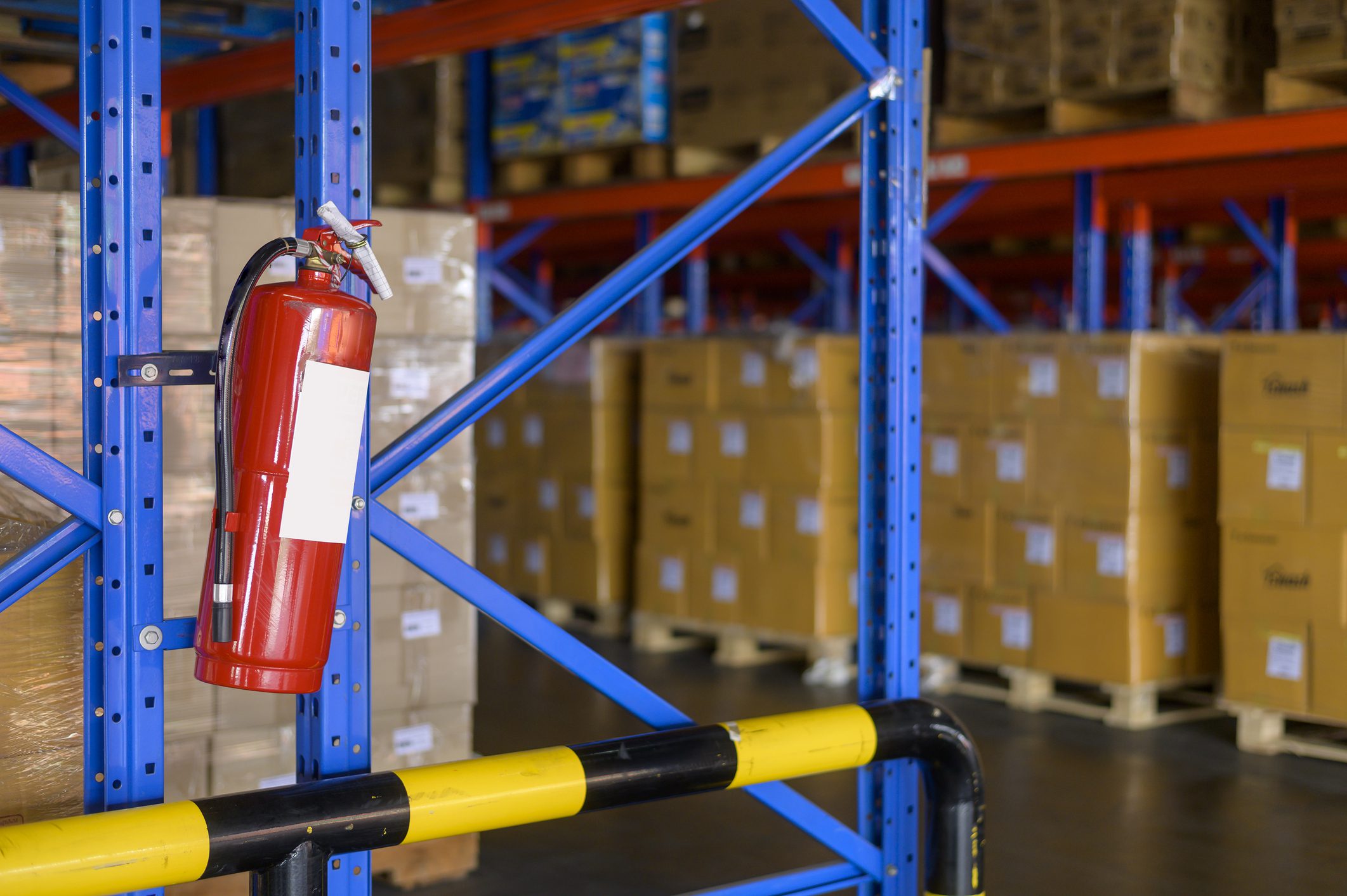
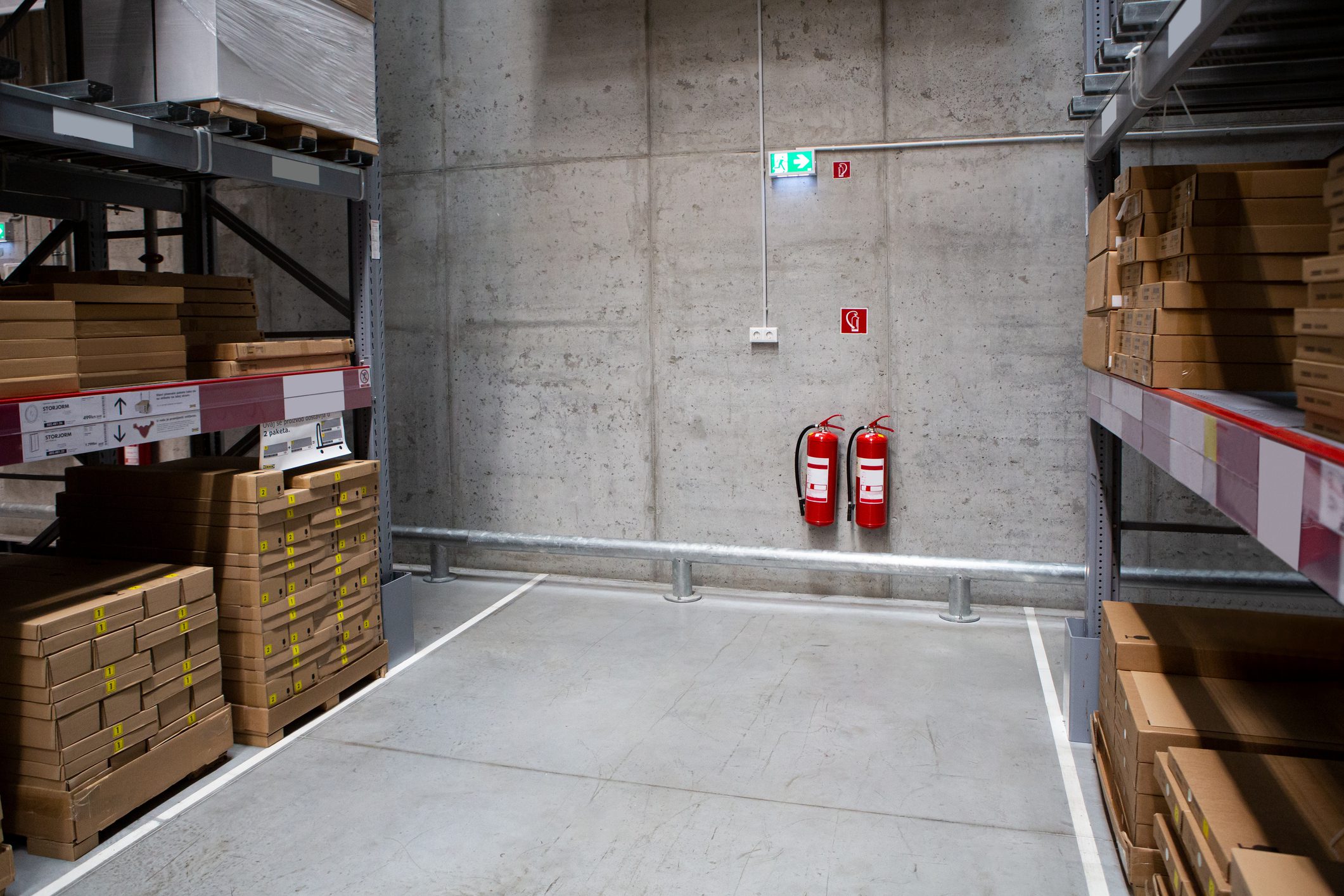
Extinguishers should be easy to find, clearly signed and not blocked by stock or equipment. They should be inspected and serviced at suitable intervals, with records kept.
Staff should also understand that extinguishers are only for small fires and only where it is safe to use them. Evacuation should always be the priority. Training can help staff understand when not to tackle a fire.
Emergency Lighting And Escape Routes
If the normal lighting fails during a fire or power cut, staff need to be able to find their way out safely. This is where emergency lighting becomes vital.
Warehouses can have long aisles, internal rooms, mezzanine floors, loading bays and changing layouts. Emergency lighting should support safe escape from all relevant areas, including corridors, staircases, exits and routes through storage areas.
Emergency lighting should be tested and maintained. Faults should be recorded and fixed quickly. If racking layouts are changed or new internal walls are added, emergency lighting should be reviewed to make sure escape routes are still properly covered.
Escape routes should also be clearly signed, kept clear and suitable for the number of people who may need to use them. Fire exits should never be blocked, locked in a way that prevents escape or hidden behind stock.
Fire Doors And Compartmentation
Fire doors help slow the spread of fire and smoke. In warehouses, they may protect offices, staircases, corridors, plant rooms, storage areas and escape routes.
A fire door must be able to close properly to work as intended. If it is wedged open, damaged, missing seals or not fitted correctly, it may fail to provide suitable protection. Regular checks and professional inspection can help identify problems before they become serious.
Our fire doors service helps businesses understand whether their fire doors are suitable, maintained and working correctly.
Compartmentation is also important. Walls, floors and ceilings may be designed to resist fire for a period of time. However, gaps around pipes, cables and services can weaken that protection. Professional fire stopping helps seal these gaps and supports the overall fire strategy of the building.
Staff Training And Emergency Planning
Equipment alone is not enough. People need to know what to do.
Warehouse staff should understand fire risks, prevention measures, alarm procedures, evacuation routes and assembly points. They should also know how to report hazards, what to do if they discover a fire and who has specific responsibilities during an evacuation.
Good fire safety training can make a significant difference. It helps staff recognise risks such as blocked exits, damaged fire doors, unsafe storage and faulty electrical equipment. It also helps create a culture where fire safety is part of everyday working practice.
Emergency plans should be clear and practical. They should consider shift patterns, lone workers, visitors, contractors, agency workers and people who may need assistance to evacuate.
Fire drills should be carried out so that procedures can be tested. If a drill reveals confusion, delays or blocked routes, improvements should be made.
Fire Safety Records And Maintenance
Warehouses should keep clear fire safety records. These records help show that checks, servicing and maintenance are being carried out.
Useful records may include fire risk assessments, fire alarm test logs, emergency lighting test records, extinguisher servicing certificates, fire door inspection reports, fire stopping records, staff training records and fire drill reports.
Records should be kept up to date and available when needed. They are useful during inspections, insurance reviews and internal audits. They also help managers track recurring faults or missed checks.
A planned maintenance schedule can make fire safety easier to manage. Instead of reacting when something goes wrong, businesses can stay ahead of testing, servicing and remedial work.
Practical Warehouse Fire Safety Checklist
A simple checklist can help warehouse managers stay focused on the main areas of risk.
Make sure your fire risk assessment is current and reflects how the warehouse is actually used. Keep escape routes, exits, call points and extinguishers clear at all times. Manage waste packaging, pallets and combustible materials carefully. Store flammable liquids and chemicals correctly. Check that fire alarms, emergency lighting and extinguishers are tested and maintained.
Inspect fire doors regularly and make sure they are not wedged open. Review fire stopping where services pass through walls, floors and ceilings. Control hot works and contractor activity. Make sure battery charging areas are suitable and kept clear. Train staff and carry out fire drills so everyone understands the procedure.
Most importantly, act quickly when problems are found. A small issue, such as a blocked fire exit or damaged door closer, can become a serious risk if it is ignored.
How Expert Fire Solutions Can Help
At Expert Fire Solutions, we support businesses with practical fire safety services that help protect people, premises and day-to-day operations.
We can help with fire risk assessments, fire alarms, fire extinguishers, emergency lighting, fire doors, fire stopping and fire safety training.
Our aim is to make fire safety straightforward for warehouse operators and business owners. We can help identify risks, explain what needs to be done and support you with suitable checks, maintenance and documentation.
Contact Us Today!
Warehouse fire safety needs a careful and consistent approach. The size of the building, type of stock, storage layout, staff numbers, equipment and daily activity all affect the level of risk.
A suitable fire risk assessment, well-maintained systems, clear escape routes, trained staff and good housekeeping can all help reduce risk. Fire safety should not be treated as a one-off task. It should be part of regular warehouse management.
If you are unsure whether your warehouse has the right fire safety measures in place, get in touch with Expert Fire Solutions. We can help you review your current arrangements and take practical steps to keep your premises safer and compliant.

