

In the event of a fire, visibility can rapidly deteriorate due to smoke, power outages, and panic. Emergency lighting systems are designed to provide illumination during such crises, guiding occupants safely out of the building. These systems are not just a safety measure; they are a lifeline that can prevent chaos and save lives.
Here’s how emergency lighting can save lives and why it’s essential for every business.
The Purpose of Emergency Lighting
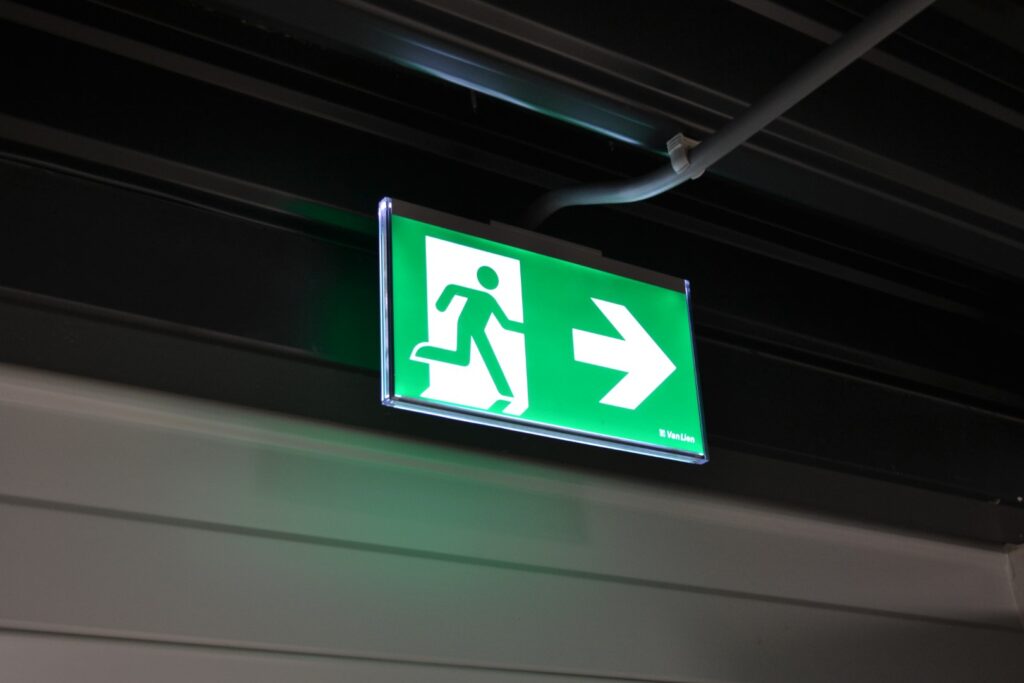
Emergency lighting serves as a beacon of safety during emergencies. It:
- Illuminates escape routes: Ensures stairways, corridors, and exits are clearly visible, even in total darkness.
- Prevents panic: Provides a sense of direction and security in stressful situations, reducing the likelihood of confusion or injury.
- Supports first responders: Guides them through the building to locate and assist occupants or extinguish the fire efficiently.
In an emergency, when every second counts, having a clear path to safety can make a life-saving difference.
Regulatory Requirements
In the UK and many other regions, emergency lighting is a legal requirement for most commercial buildings. Standards such as BS 5266-1 outline the design, installation, and maintenance of these systems. Businesses are legally obligated to ensure their premises meet these standards. Failure to comply can result in fines, liability issues, and increased risks to life.
Compliance involves more than just installation. It requires ongoing maintenance, detailed records of inspections, and periodic testing to ensure the system remains functional. Expert Fire Solutions provides guidance and support to help businesses meet these regulatory requirements seamlessly.
Types of Emergency Lighting
- Escape Route Lighting: Guides occupants to the nearest exit, ensuring safe navigation through corridors and stairwells.
- Standby Lighting: Provides temporary lighting in critical areas to prevent operations from coming to a halt during a power failure.
- High-Risk Task Lighting: Ensures sufficient illumination for completing potentially hazardous tasks during an emergency, such as shutting down machinery.
By combining these types of lighting, businesses can create a comprehensive system that addresses various emergency scenarios.
Maintenance and Testing
To ensure reliability, emergency lighting systems must undergo regular inspections and testing. Monthly function checks verify that the system is operational, while annual full discharge tests ensure that the lighting can last for the required duration during a power outage. Businesses should also review their emergency lighting plans regularly to adapt to any changes in building layout or usage.
The Lifesaving Impact
In an emergency, even seconds can make the difference between life and death. Emergency lighting systems facilitate swift evacuations, reduce confusion, and ultimately save lives. These systems are not just an investment in safety but a necessity for protecting lives and minimising risk during unforeseen events.
At Expert Fire Solutions, we provide professional design, installation, and maintenance of emergency lighting systems. We also offer a full suite of fire safety services, including fire detection systems, fire extinguishers, fire stopping, fire doors, fire safety training, and fire risk assessments.
Let us help you create a safer environment for your business. Contact us today!

