
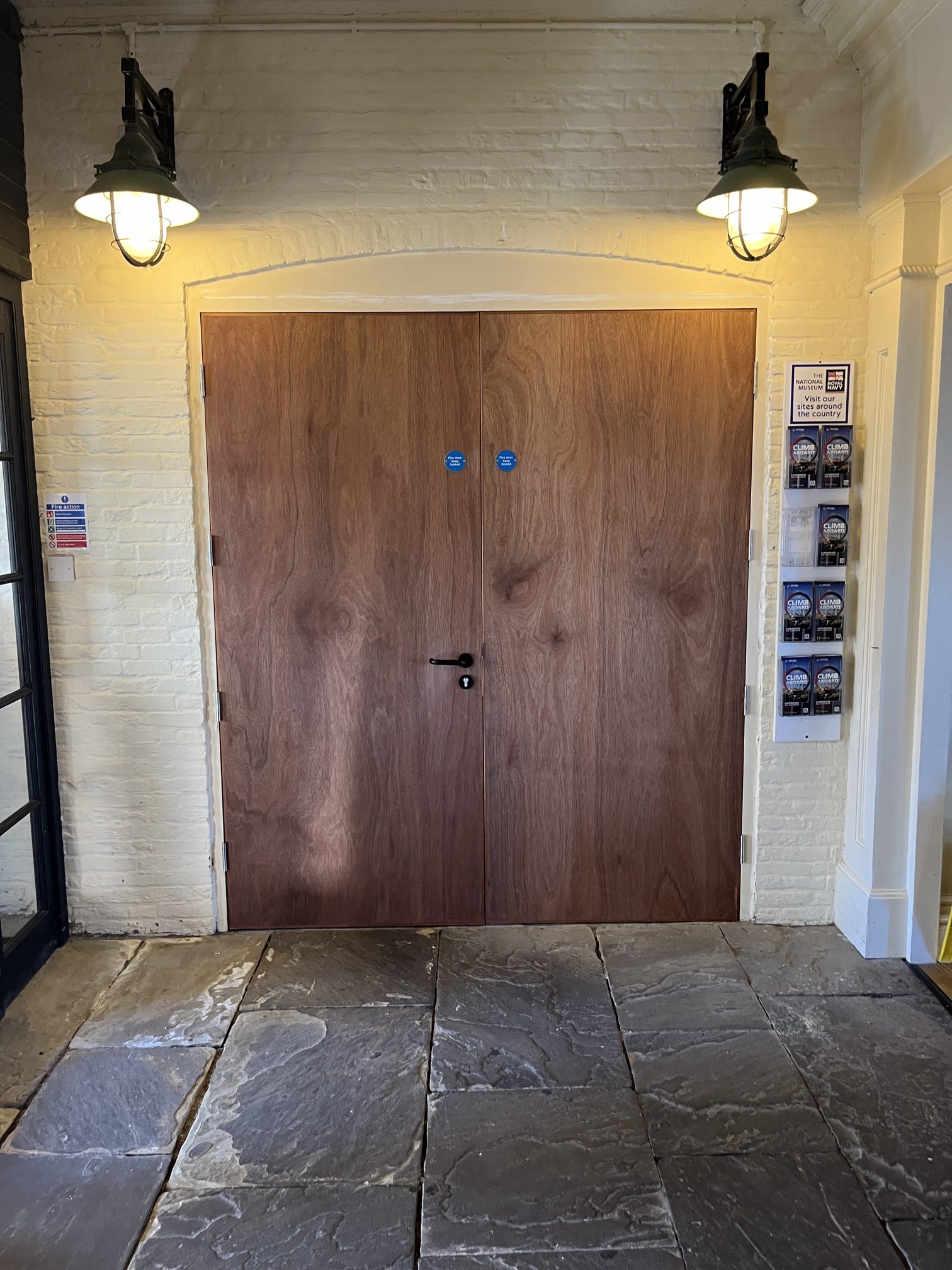
Fire doors play a critical role in protecting life and property. While fire alarms alert you to danger and fire extinguishers help tackle small fires, fire doors work quietly in the background. They slow the spread of fire and smoke, protect escape routes and give people time to get out safely.
At Expert Fire Solutions, we install, inspect and maintain fire doors across Newcastle upon Tyne. Many business owners understand they need them, but fewer understand how they actually work or why they matter so much.
In this guide, we explain how fire doors function, what makes them effective and what you must do as a responsible person in Newcastle to remain compliant.
What Is a Fire Door?
A fire door is a specially constructed door designed to resist fire and smoke for a set period of time. You will often see ratings such as FD30 or FD60. These numbers refer to the number of minutes the door can resist fire under test conditions.
An FD30 door is designed to resist fire for at least 30 minutes. An FD60 door is designed for at least 60 minutes.
Fire doors form part of a building’s passive fire protection system. Unlike alarms or extinguishers, they do not require activation. They are built into the structure and perform automatically when a fire occurs.
In many Newcastle offices, apartment blocks, schools and commercial units, fire doors protect stairwells, corridors, plant rooms and high risk areas.

How Does a Fire Door Stop Fire Spreading?
Fire spreads rapidly when it has access to oxygen and open pathways. Standard internal doors offer very little resistance to flames and heat. A fire door, by contrast, is built to withstand high temperatures and prevent fire from passing through.
A properly installed fire door works in three key ways.
First, it resists flames and heat. The core of the door is made from solid materials such as timber composite or mineral based boards. These materials slow the transfer of heat and prevent flames from burning through too quickly.
Second, it restricts smoke. Smoke causes more deaths in fires than flames. Fire doors include intumescent seals around the edges. When exposed to heat, these seals expand and close the gap between the door and the frame. This limits the movement of smoke.
Third, it supports compartmentation. Modern buildings are divided into fire resisting compartments. Fire doors form part of these compartments, preventing fire from spreading freely throughout the building.
In Newcastle commercial premises, this means a fire starting in one office or store room does not immediately affect escape routes or other occupied areas.
What Are the Main Components of a Fire Door?
A fire door is not just a thicker version of a normal door. It is a complete system made up of several tested components.
The door leaf is the main part of the door. It contains the fire resistant core.
The frame must also be fire rated. If you install a fire rated door into a standard frame, you compromise performance.
Intumescent seals sit around the edges of the door or frame. These seals expand when exposed to heat, sealing gaps.
Cold smoke seals may also be included. These help prevent smoke from passing through before temperatures rise high enough to activate the intumescent material.
Hinges, locks, latches and door closers must all be fire rated and correctly fitted. A door closer ensures the door shuts fully after use. A fire door left open cannot perform its function.
Glazing panels, if present, must use fire resistant glass and suitable beading.
Every component matters. If you change one element without proper assessment, you can affect the overall fire rating.
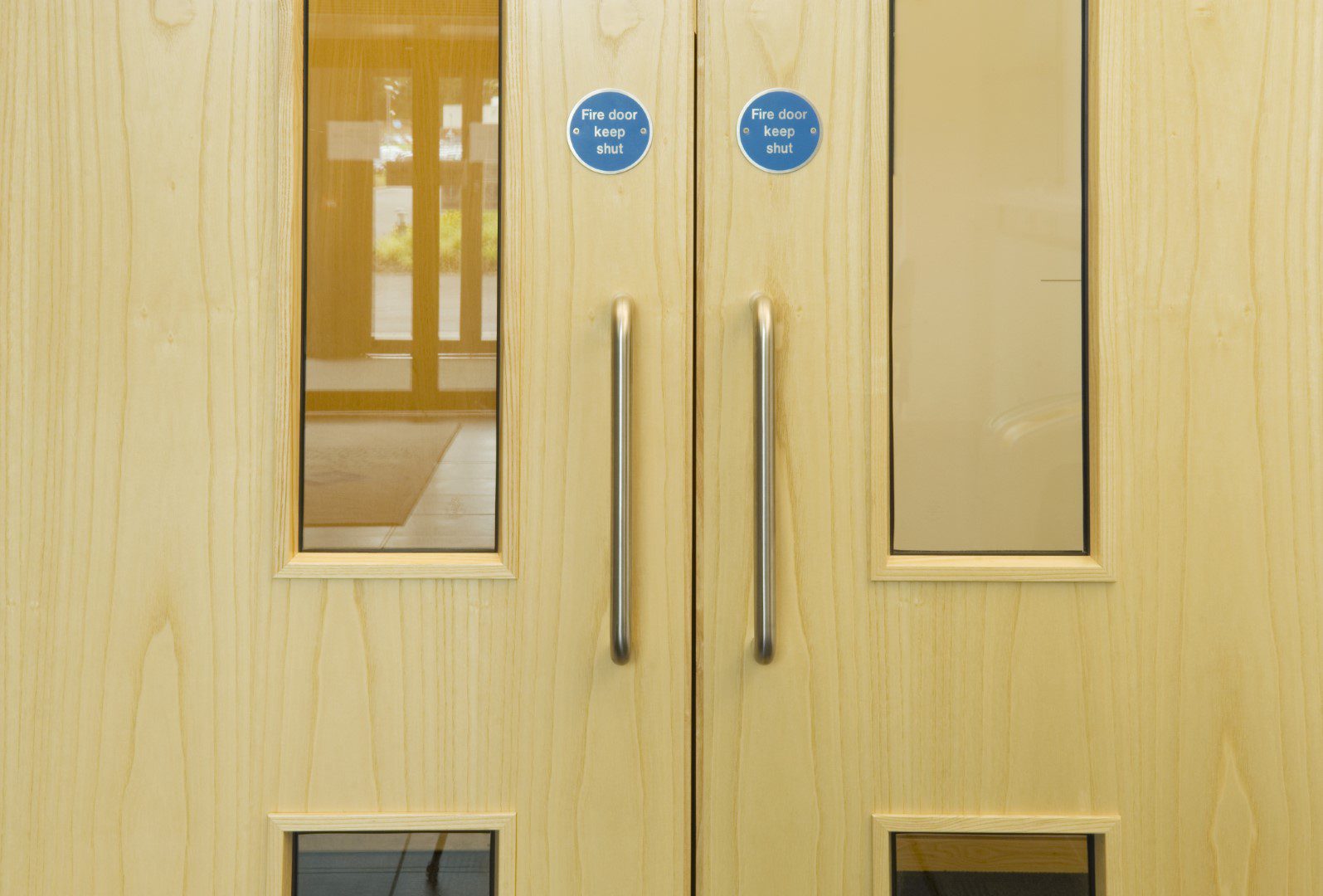
Why Are Fire Doors So Important in Newcastle Buildings?
Newcastle has a wide range of building types. You will find modern office blocks, converted residential properties, heritage buildings, retail spaces and industrial units.
Each of these environments presents different risks, but they all share one requirement. People must be able to escape safely in the event of a fire.
Fire doors protect escape routes such as corridors and stairwells. If smoke fills these areas, evacuation becomes difficult or impossible.
In multi occupancy buildings such as apartment blocks or student accommodation in Newcastle, fire doors prevent a fire in one unit from quickly spreading to others.
In commercial settings, fire doors also limit property damage. By containing a fire within one compartment, you reduce the scale of destruction and potential business interruption.
What Happens If a Fire Door Fails?
A poorly maintained or incorrectly installed fire door can fail long before its rated time.
Common issues we identify during inspections in Newcastle include:
Doors that do not fully close because the closer is faulty.
Large gaps around the edges due to poor installation.
Missing or damaged intumescent seals.
Incorrect hinges or hardware.
Holes drilled through the door leaf for cables or fittings.
Even small defects can undermine performance. A gap that seems minor under normal conditions can allow smoke to pass through quickly in a fire.
As the responsible person, you have a legal duty to ensure fire doors remain effective. Failure to maintain them can lead to enforcement action and put lives at risk.
How Do Fire Doors Work Alongside Fire Alarms?
Fire doors and fire alarm systems work together as part of an integrated fire strategy.
When a fire alarm activates, it alerts occupants to evacuate. At the same time, fire doors ensure escape routes remain protected.
In some Newcastle premises, fire doors are held open by approved electromagnetic devices linked to the fire alarm system. This allows free movement during normal operations. When the alarm activates, the device releases and the door closes automatically.
This arrangement is common in care homes, hospitals and large office buildings where constant closing doors would cause disruption.
We always ensure that any hold open devices are correctly linked to the alarm system and tested regularly.
Do You Need Fire Door Inspections in Newcastle?
Yes. Regular inspection is essential.
Current guidance requires responsible persons to check fire doors regularly and keep them in good condition. In multi occupied residential buildings, more frequent checks may apply.
We recommend routine inspections to look for:
Damage to the door leaf or frame.
Gaps that exceed recommended limits.
Missing or damaged seals.
Faulty closers.
Loose hinges or hardware.
Signs of unauthorised alterations.
In Newcastle, we support landlords, managing agents and business owners with structured inspection and maintenance programmes. This ensures ongoing compliance and peace of mind.
Can You Alter a Fire Door?
You should never alter a fire door without professional advice.
Drilling holes, fitting non approved hardware or trimming the door can affect its fire resistance. Even repainting over seals can reduce effectiveness.
If you need to make changes to your premises in Newcastle, such as installing access control or upgrading ironmongery, speak to a competent fire door specialist first.
We assess whether proposed changes maintain compliance and safety standards.
How Do You Know If Your Fire Doors Are Compliant?
Compliant fire doors should:
Be correctly labelled or certified.
Fit properly within a fire rated frame.
Close fully and latch securely.
Have intact intumescent and smoke seals.
Include suitable fire rated hardware.
If you are unsure, we can carry out a detailed survey of your Newcastle premises and provide clear recommendations.
We do not take a box ticking approach. We focus on real world performance and practical safety.
Protecting Your Newcastle Business with Proper Passive Fire Protection
Fire doors form a vital line of defence. They contain fire, protect escape routes and support your overall fire strategy.
At Expert Fire Solutions, we work with businesses across Newcastle upon Tyne to install, inspect and maintain fire doors to the highest standards. We combine technical knowledge with practical experience, ensuring your building meets legal requirements and protects the people inside it.
If you are unsure about the condition of your fire doors, or you need advice on new installations, contact Expert Fire Solutions today. We will assess your premises and help you ensure your passive fire protection works exactly as it should when you need it most.

