
Knowing how many fire extinguishers your business needs isn’t just a box-ticking exercise, it’s a legal and practical necessity. In the UK, the law expects every business to carry out a fire risk assessment, identify hazards and protection levels, and provide the right type and number of extinguishers. Most businesses require at least two Class A fire extinguishers per floor, with further devices needed for specific risks or large areas, following current fire safety and British Standards. Placement matters too: every part of the premises should be within 30 metres of the correct extinguisher type.
Let’s break down not only the number you need, but also the legal requirements, calculations, and best practices so your business can remain safe and fully compliant.
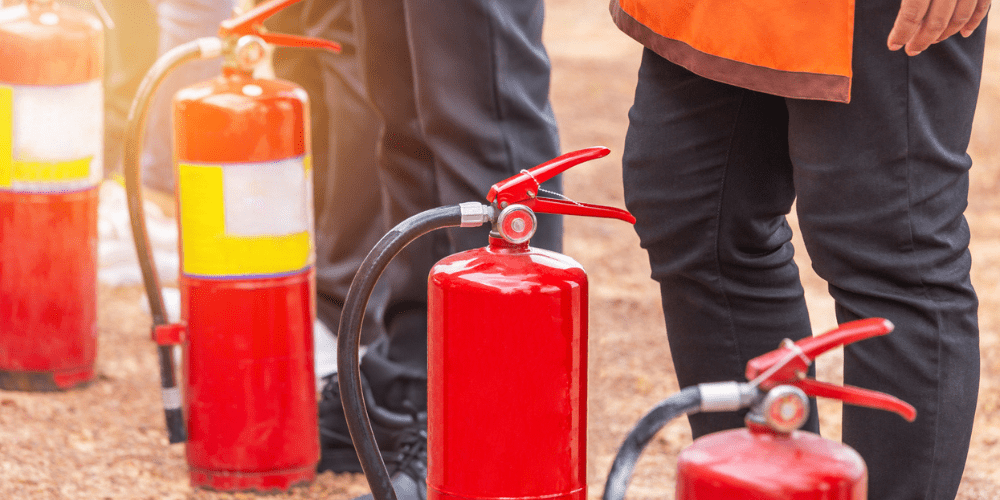
The Legal Requirements for Fire Extinguishers in UK Businesses
The UK’s principal fire safety regulation, the Regulatory Reform (Fire Safety) Order 2005, places clear responsibility on the “responsible person” within every workplace to ensure that fire safety equipment is provided, maintained, and appropriate for the risks onsite. Every non-domestic premises must be fitted with suitable fire extinguishers, and it’s not just about having “something”, they must be the right type, quantity, and correctly located.
Complying with British Standard BS 5306-8:2012 guides how businesses assess their needs. This standard is widely cited by fire safety professionals and enforcement officers during audits or spot checks. In practice, most workplaces need at least two Class A units per floor unless the area is very small, types must match the risks present, and no one should be more than 30 metres from a suitable extinguisher.
A professional fire risk assessment is required to establish the exact risks in your workplace, which in turn informs the size, type, and location of all extinguishers. This assessment should be reviewed regularly and updated whenever there are significant changes in the building or business operation.
Calculating How Many Fire Extinguishers Your Business Needs
Determining the right number of fire extinguishers means more than picking a figure out of thin air. The calculation brings together floor area, layout, building levels, and specific fire risks. Here’s how it works in practice:
Minimum Requirements
British Standard BS 5306 suggests a minimum of two 13A-rated fire extinguishers per floor. The “13A” rating reflects an extinguisher’s capability against a standard Class A fire. If two units together achieve at least 26A, that also meets the requirement. Where the floor area is small and a single unit provides full coverage within access rules, this may be acceptable.
Area Coverage
As a rule of thumb, plan for one 13A-rated extinguisher per 200 m² of floor space. For example, a 600 m² open-plan office would need a combined rating of at least 39A, which could be three 13A units or a mix that achieves or exceeds the total.
Placement Strategy
No point on a floor should be more than 30 metres’ travel from a suitable Class A extinguisher. Units should be mounted or placed on stands so they remain visible and free from obstruction, and installed at a height most people can use easily.
Special Fire Risks
Where there are specific hazards, add appropriate units for those risks. For instance, use CO2 near electrical equipment, wet chemical for cooking oil in kitchens, and dry powder for flammable gases. Industrial metal risks call for specialist solutions.
For an expert risk assessment and on-site calculation, a professional like Expert Fire Solutions provides detailed evaluations in line with the latest standards.
Types of Extinguishers and Matching Them to Your Risks
Having “enough” extinguishers is just the baseline. You also need the right types for the specific hazards in your workplace. Here’s a concise run-through:
- Water and Water Additive extinguishers – best for solid combustibles such as wood, paper, and textiles. Not for electrical, liquid, or cooking fires.
- Foam extinguishers – suitable for ordinary combustibles and flammable liquids (Class B). Useful in offices, warehouses, and shops.
- CO2 extinguishers – vital for electrical risks in offices, server rooms, and workshops. They leave no residue and act quickly.
- Dry Powder extinguishers – multipurpose units for flammable gases (C), liquids (B), and electrical fires. Indoor use is limited to trained users due to residue inhalation. Specialist dry powder variants for metals, such as L2 or M28, are available where needed.
- Wet Chemical extinguishers – essential in commercial kitchens for deep fat fryers and cooking oil fires (Class F).
The risk assessment should review the building room by room, matching extinguisher types to current and potential risks.
Fire Extinguisher Placement: The 30-Metre Rule and Beyond
Proper placement is just as critical as quantity or type. Fire extinguishers need to be visible, unobstructed, and easy to reach in an emergency. On each floor, no one should need to travel more than 30 metres horizontally to reach an extinguisher suited to the risk in that area. Mount units on brackets at a comfortable height, typically with the handle around 1 metre above the floor, or use dedicated stands. Position additional devices at higher-risk points, for example keeping a wet chemical unit close to cooking equipment in a kitchen where it can be reached safely. Add clear location signage so devices can be found even if lighting fails.
Real-World Example: Calculating for a Typical Office
Imagine a two-storey office with each floor covering 300 m² and a server room on the second floor. Each level needs at least two 13A-rated extinguishers, ideally positioned near exits or the stair core. Because 300 m² exceeds the 200 m² rule of thumb, three 13A-rated water or foam extinguishers per floor would give fuller coverage. Add a 2 kg CO2 unit next to consumer units or server racks. In the kitchen or break room, install a wet chemical extinguisher within a safe reach of the cooking area.
Fire Extinguisher Maintenance: Meeting Compliance and Ensuring Safety
Having sufficient extinguishers cannot keep your business safe unless they’re regularly maintained. The law requires devices to be commissioned on-site after installation and recorded, with basic visual checks each month by the responsible person to confirm location, condition, pressure indicator status, and that they have not been discharged. A qualified professional should carry out a full annual service, including pressure and condition checks and confirmation that installation remains correct. Book compliant fire extinguisher servicing and maintenance to BS 5306-3 so your records and equipment stay audit ready.
A complete review is also needed whenever there are significant changes, such as building works, process changes, or the introduction of new hazards. If a unit is out of date, damaged, used, or missing, arrange immediate service or replacement. Many types are replaced at around five years and CO2 at around ten, but always follow the manufacturer’s guidance.
Who Decides: And How to Ensure You Stay Compliant
The role of “responsible person” is vital under the Regulatory Reform (Fire Safety) Order 2005. This is typically the employer, owner, landlord or occupier of the business. That person must arrange the risk assessment, act on its findings, and ensure suitable and sufficient fire extinguishers are in place and maintained. They must also make sure staff know which type to use and when, with every device carrying clear instructions. Regular fire drills and refresher training help everyone respond confidently in a real emergency.
Common Mistakes Businesses Make When Deciding on Fire Extinguishers
- Underestimating how many are needed, especially in larger, multi-level, or open-plan settings.
- Using the wrong types, such as water extinguishers near electrical panels where a CO2 unit is needed.
- Failing to update or expand equipment as the business grows, adds new risks, or moves premises.
- Overlooking specialist areas such as commercial kitchens, workshops, or storage rooms.
- Hiding extinguishers behind furniture or displays and failing to provide clear signage.
Address these issues proactively so your fire safety plan stands up to both real emergencies and the scrutiny of fire safety authorities.
Environmental Considerations for Fire Extinguishers
As businesses focus more on sustainability, it’s worth noting the environmental impact of extinguisher disposal and maintenance. Water and foam units are more eco-friendly than chemical agents. Refilling may be suitable for some extinguishers, but disposal regulations must be followed for pressurised or chemical units. Always use certified waste contractors and ask your fire safety partner for environmentally responsible disposal options.

When to Review and Update Your Fire Extinguisher Provision
- Annually, as part of your organised fire risk review.
- Whenever layouts change, such as new partitions, expansions, or major refurbishments.
- If you introduce new hazards, such as machinery, chemicals, cooking areas, or significant electrical installations.
- After an extinguisher is used, lost, or becomes defective.
This review process keeps your fire safety equipment effective, legal, and ready for real emergencies.
Where to Get Professional Guidance and Bespoke Advice
While these guidelines give you a strong foundation, every business is different. Specialist fire safety providers like Expert Fire Solutions can perform full, tailored risk assessments to identify the precise number and types of extinguishers you need. They can also guide you on installation, staff training, and regulatory updates, ensuring your workplace is always in line with the latest UK regulations and best practices. You can also learn more about our fire safety specialists and wider services.
FAQs:
Do you supply and install fire extinguishers in the North East?
Yes. Expert Fire Solutions supplies, installs, and commissions extinguishers across the North East of England, matching types and sizes to your site risks and providing signage and stands where needed.
Can you service our existing extinguishers to BS 5306-3?
Yes. We carry out annual servicing and commissioning in line with BS 5306-3 and provide service records. We also advise the responsible person on monthly user checks to keep equipment ready for use.
Can you complete the fire risk assessment that sets extinguisher quantities?
Yes. Our assessors carry out fire risk assessments and specify the number, type, and placement of extinguishers, alongside alarms, emergency lighting, and fire doors where required.
What extinguisher types do you provide?
We supply water, foam, CO2, dry powder (including specialist metal powders where needed), and wet chemical units. Your risks determine the mix we recommend and install.

