
Fire doors are legally required and play a life-saving role in protecting people and property during a blaze. In the United Kingdom, nearly every non-domestic building, along with many residential ones, must have fire doors installed in specific locations. The right placement and selection stop fire and smoke from spreading, providing time for escape and minimising damage.
Why Fire Doors Are Needed
Fire doors do far more than simply look sturdy or heavy. Their core purpose is to resist fire and smoke for a set time (usually 30 or 60 minutes). This containment means that, if a fire starts, it remains sealed within its space. The benefits include giving everyone inside more time to escape safely, protecting escape routes such as corridors and staircases, limiting structural and property damage, and reducing insurance risk which can, in some cases, lower premiums.
Failure to provide appropriate fire doors exposes building users and owners to significant risk, not only physical harm but also severe legal and financial penalties.
Where Fire Doors Are Required in Different Building Types
UK regulations vary depending on the category and layout of a building. Here’s how requirements typically break down:
Non-Domestic and Commercial Premises
The Regulatory Reform (Fire Safety) Order 2005 makes it mandatory for businesses, public buildings and most workplaces to install fire doors at key points. You must protect stairwells as emergency escape routes, use fire doors along corridors to separate storeys and zones, isolate higher-risk rooms such as plant rooms, storage areas and kitchens, and place doors at compartment lines between different occupancy areas. This applies to offices, shops, factories, schools, healthcare, hotels and more.
Blocks of Flats and HMOs (Houses in Multiple Occupation)
All escape routes in shared residential buildings need compliant fire doors. This includes main entrances to each flat, doors to stairwells and communal corridors, and any basement or loft conversion accesses. The entrance door to each individual flat or bedsit must be a fire door, often with an FD30 (30-minute resistance) rating.
Domestic Properties
In traditional houses, fire doors are not usually required by law unless certain conditions apply. If your home is three storeys or higher, doors must protect stairs. An internal door between the house and an integral garage must be fire-rated. If loft conversions have created additional storeys, new doors must meet the relevant fire rating. Even where not strictly required, fire doors can be a wise investment for added safety, especially in large or extended homes.
Legal Framework and Guidance
Two main sets of rules govern fire doors in England and Wales: the Regulatory Reform (Fire Safety) Order 2005 and the Fire Safety (England) Regulations 2022, which affect tall residential premises. These regulations specify where fire doors are mandatory and stress the importance of correct installation, fire stopping installation, and regular maintenance. Enforcement officers can issue heavy fines or prosecutions for non-compliance, particularly if fire doors are damaged, wedged open, or missing required signage.
Different UK nations have slight variations: Scotland and Northern Ireland have their own codes, but the principle (protecting means of escape) is universal.
What Qualifies as a Fire Door?
A fire door is a controlled, fully certified barrier, never simply any solid door. To be compliant, a fire door must:
- Have an FD rating such as FD30 or FD60 (providing 30 or 60 minutes protection)
- Contain certified hardware: intumescent strips, self-closing devices, fire-rated glazing if fitted
- Be installed by a competent person: correct fitting is vital for performance
- Carry certification labels (on the top or side edge)
- Remain undamaged and unobstructed
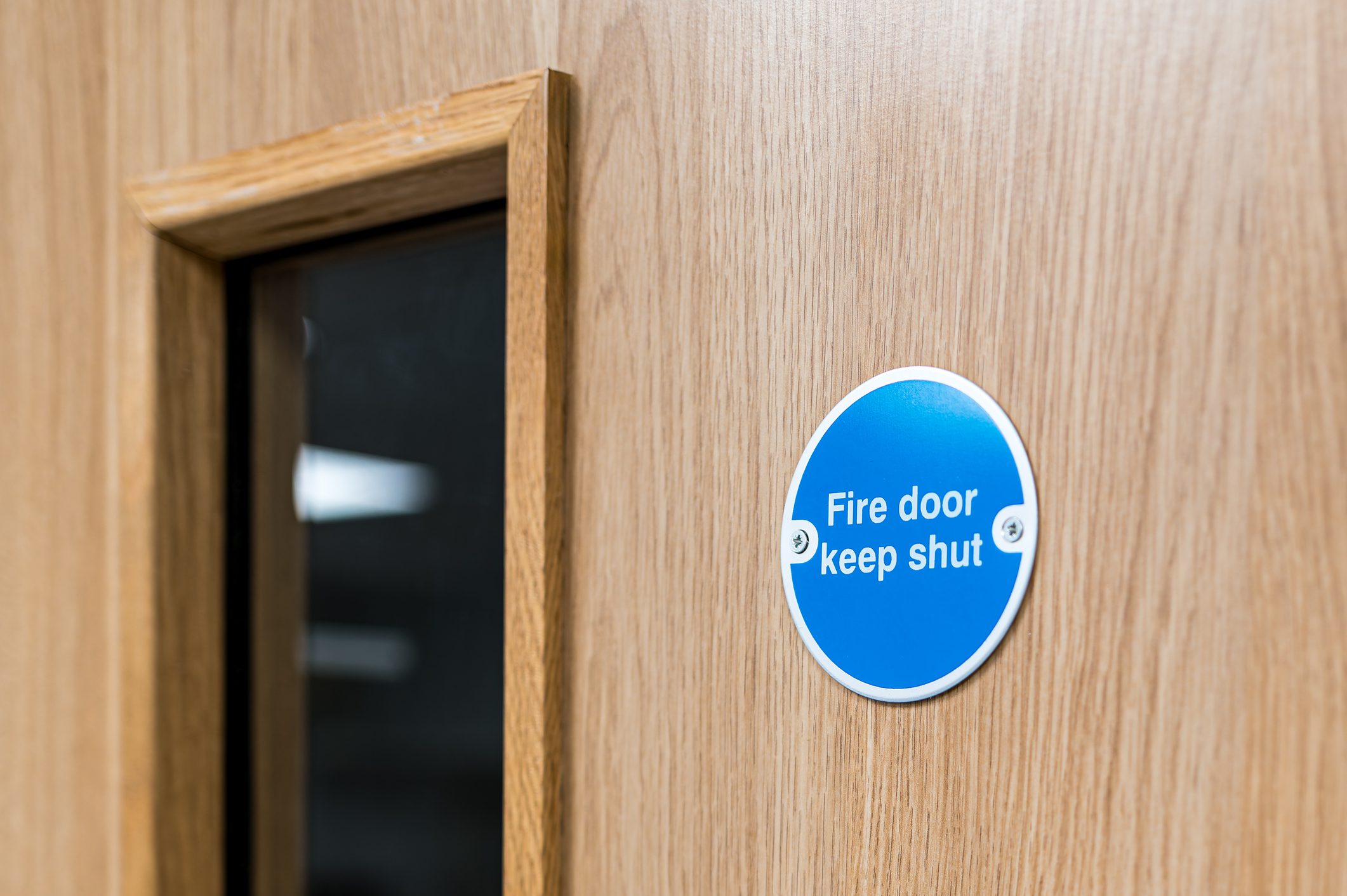
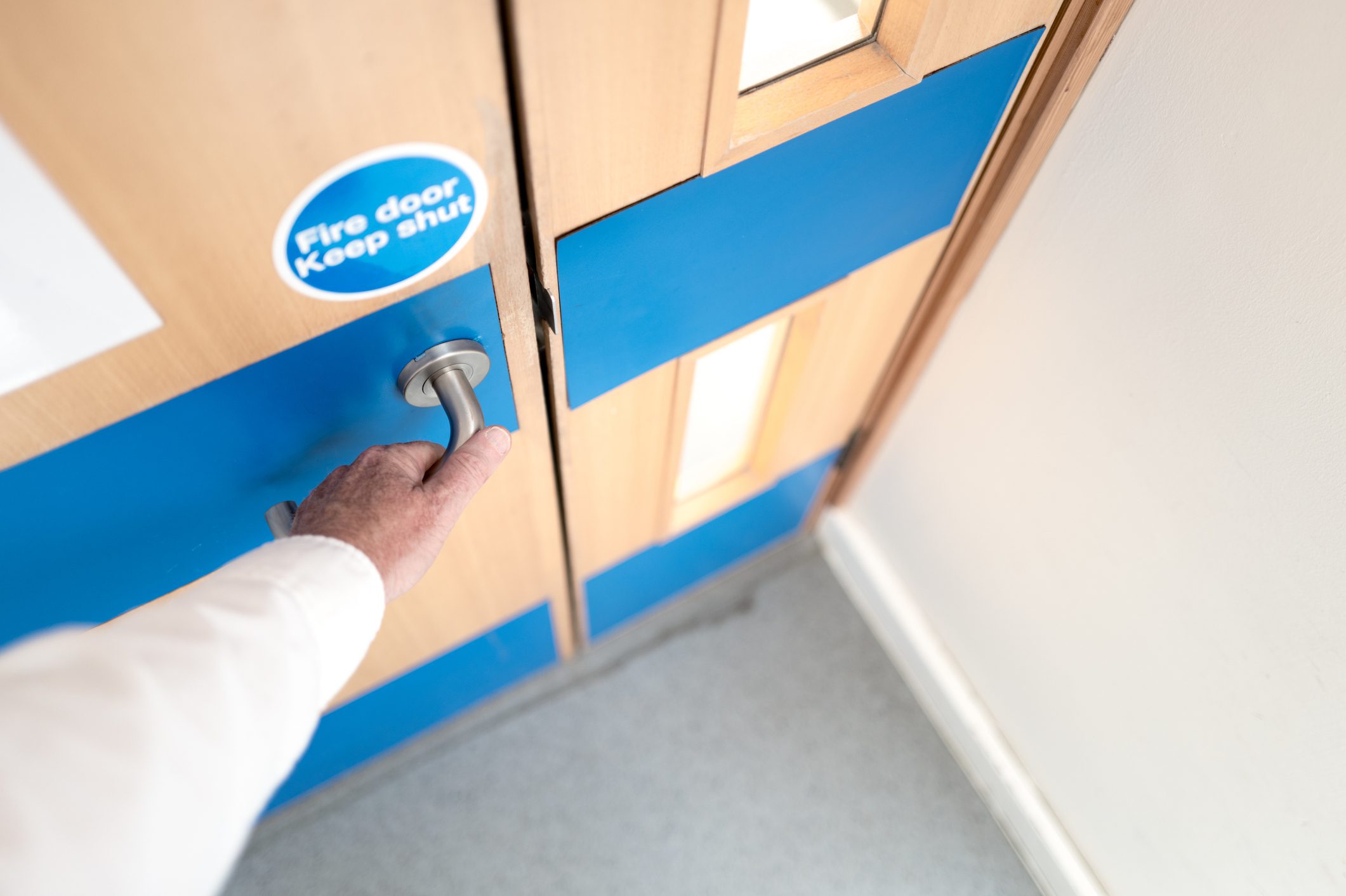
Visual signs of a fire door include “Fire Door Keep Shut” signs, visible seals on the frame, and closer arms. If unsure, always check for the certificate label.
Who Is Responsible for Fire Doors?
The law places the duty to provide and maintain fire doors on the “responsible person”. This may be the building owner, landlord or employer, a facilities manager or appointed agent, a headteacher or principal in schools, or, in shared residential properties such as HMOs, the landlord or managing agent. In practice, competence is essential. Inspection, repairs and fitting should be done by recognised professionals. Occupiers should never tamper with self-closers or seals.
Choosing the Right Fire Door
For each location within your building, consider the legal minimum FD rating required and check your building’s fire risk assessment, the need for smoke protection where an “S” designation is required for smoke control, any security and acoustic requirements that matter for flats or high-use areas, and the finish that suits the setting without compromising compliance. All ironmongery must be certified to match the door’s certification, and professional installation is critical. You can arrange independent reviews and documentation through our dedicated service for fire risk assessments. Consulting a fire door specialist ensures proper specification and peace of mind. You can learn more about inspection and installation options through our dedicated fire door services.
Common Issues and Consequences of Non-Compliance
Fire doors can be compromised over time. Common faults include:
- Missing or damaged seals
- Faulty or removed self-closing devices
- Door gaps larger than regulations allow
- Wedged-open or obstructed doors
- Unauthorised replacement of compatible hardware
These issues invalidate the certification and the protective value of the door. If routine checks reveal a problem, it must be resolved promptly. Failing to do so can result in prosecution, invalidated insurance, or tragic outcomes in the event of a fire.
What to Compare When Selecting a Fire Door Solution
To make an informed decision, review certification to ensure products are properly accredited and compliant, evaluate the fitting service and look for proven experience in your building type, and confirm there is planned maintenance support to prolong door life. Consider the guarantees offered, including warranty coverage and post-installation support. Weigh cost against long-term protection and the potential regulatory penalties of getting it wrong. Safety should always take precedence over cost-cutting. Professional guidance makes navigating these choices straightforward.
Find full details, guidance and booking information in our fire doors installation and inspection service for expert support tailored to your building.
Plan Your Next Step
The correct use of fire doors delivers essential life safety, keeps your building within the law, and protects your investment. For reliable advice or to schedule a fire door assessment, contact Expert Fire Solutions for expert help

FAQs:
Do you install and certify FD30 and FD60 fire doors?
Yes. We supply and install fully certified FD30 and FD60 fire doors with matched, tested ironmongery. On completion, we provide certification labels and handover documentation confirming compliance.
Can you inspect existing fire doors and provide a remedial report?
Yes. Our engineers carry out site inspections, measure critical gaps, check closers, seals and signage, then issue a clear report with remedial actions and priorities.
Can you combine fire door works with fire stopping and a fire risk assessment?
We can coordinate fire door installation or repairs alongside fire stopping works and a formal fire risk assessment, which saves time on access and reduces disruption.
What documentation will I receive after installation or remedial works?
You will receive product and installation certificates, photographs where required, and an itemised report of any outstanding defects. We can also tag doors for easy ongoing compliance checks.
Which areas do you cover?
We work across the North of England, including Durham, Newcastle, Gateshead, Sunderland, Middlesbrough, Darlington and Hartlepool.
For larger projects further afield, please speak to our team.

